Do You Need a Dedicated Server? (2026): Usually Not, and How to Tell
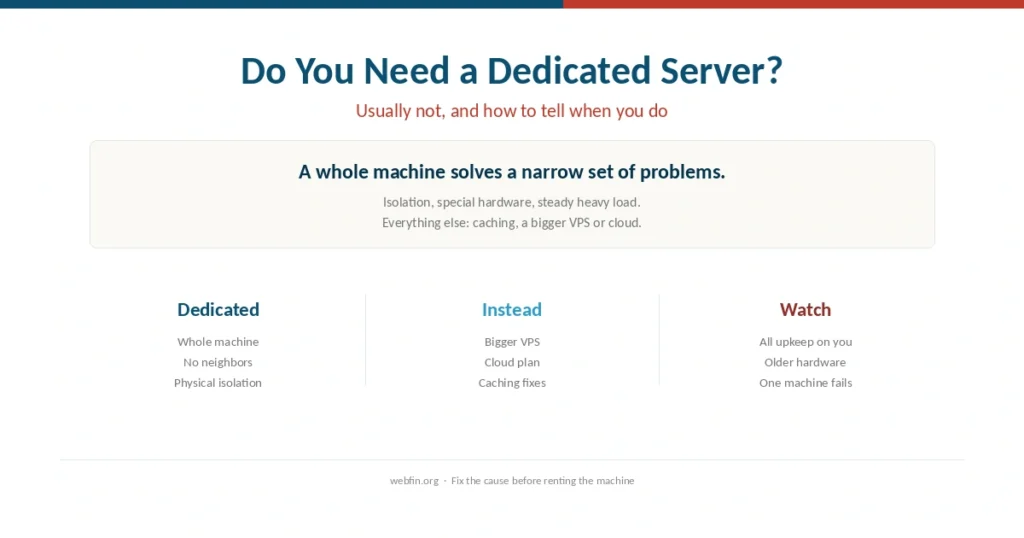
A dedicated server solves a narrow set of problems. For most busy sites, caching, a bigger VPS or a cloud plan does the job for less.
Step-by-step guides for the things that go wrong after you buy hosting: migrations, SSL certificates, backups, slow sites, downtime. Written for someone with a control panel already open, not a shopping cart.
A dedicated server solves a narrow set of problems. For most busy sites, caching, a bigger VPS or a cloud plan does the job for less.
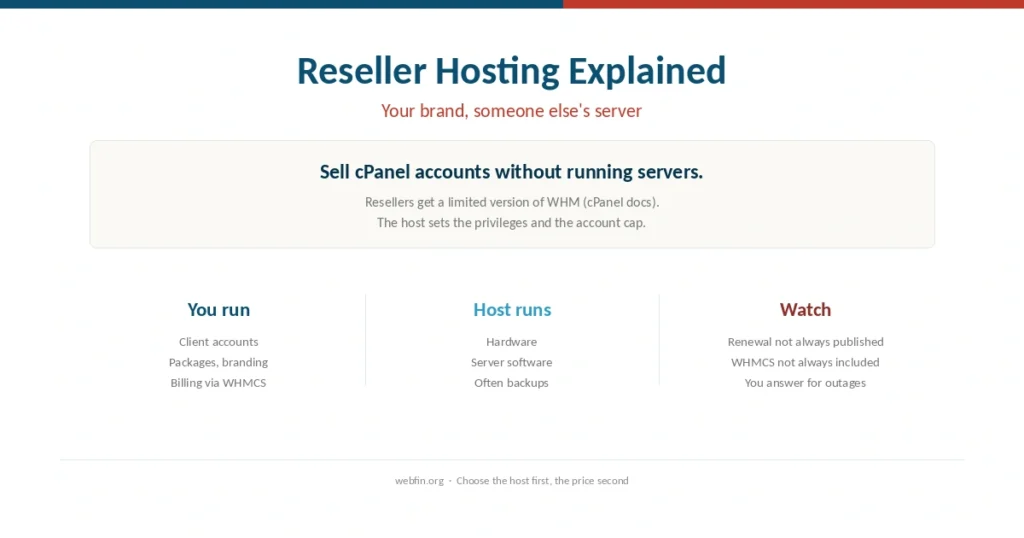
Reseller hosting lets you sell cPanel accounts under your own name. You answer to clients for a server you do not control, so pick the host first.
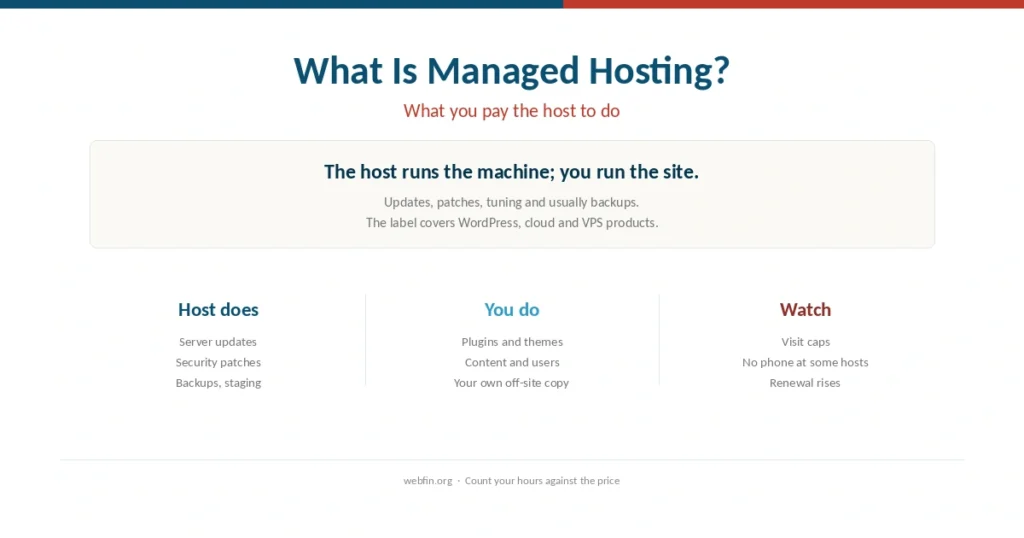
Managed hosting means paying the host to run the server work. The label covers different products, so read what each plan includes.
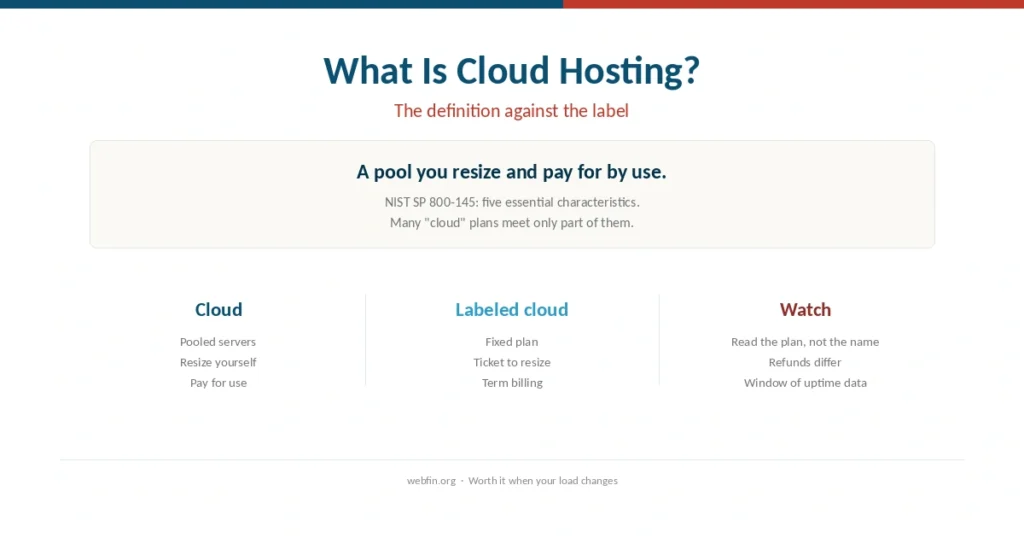
Cloud hosting means a pool you can resize and pay for by use. Many plans carry the label while meeting only part of the definition.
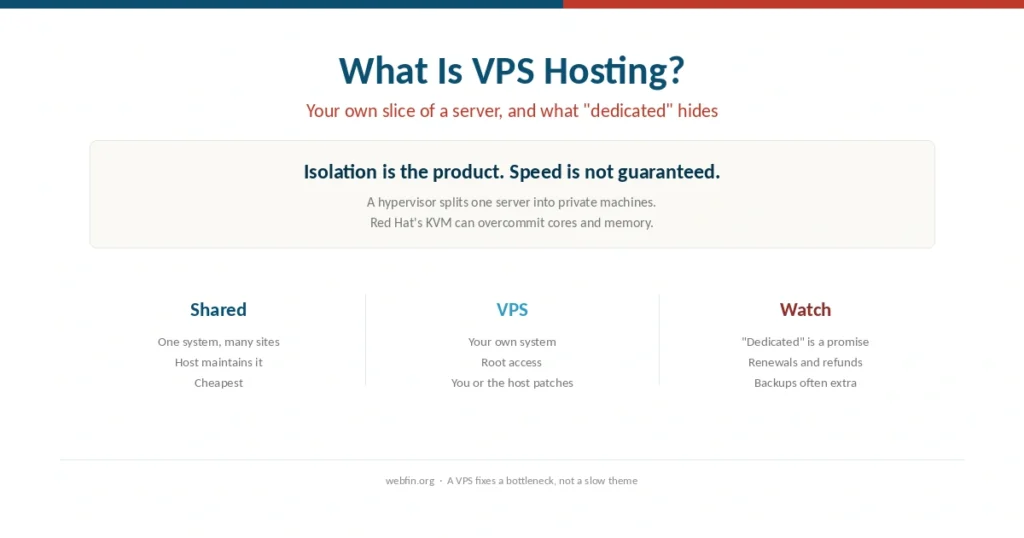
A VPS is a slice of one server that behaves like your own. Its dedicated resources are a scheduling promise, and the real price depends on who patches it.
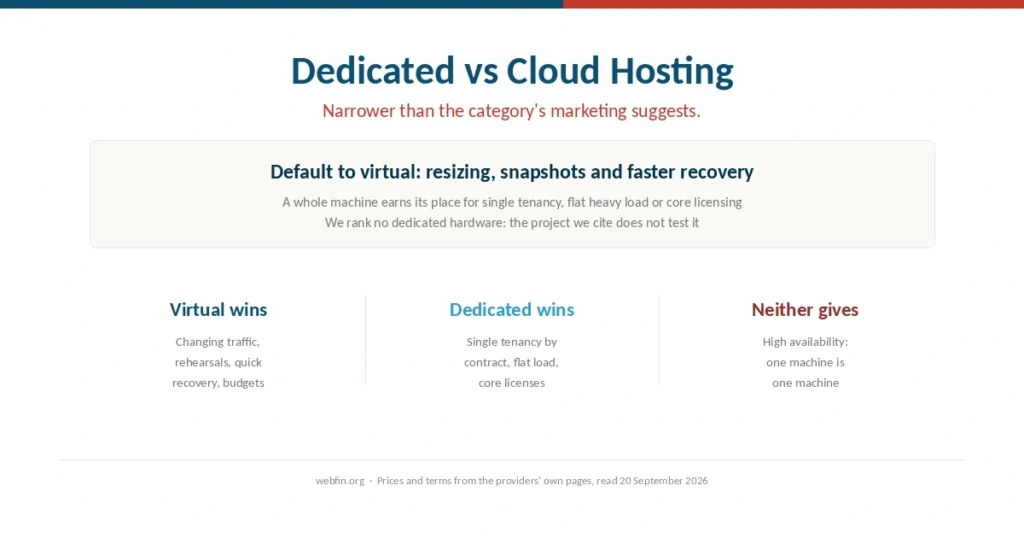
We do not rank dedicated hardware, because nothing we cite measures it. The decision method is the useful part.
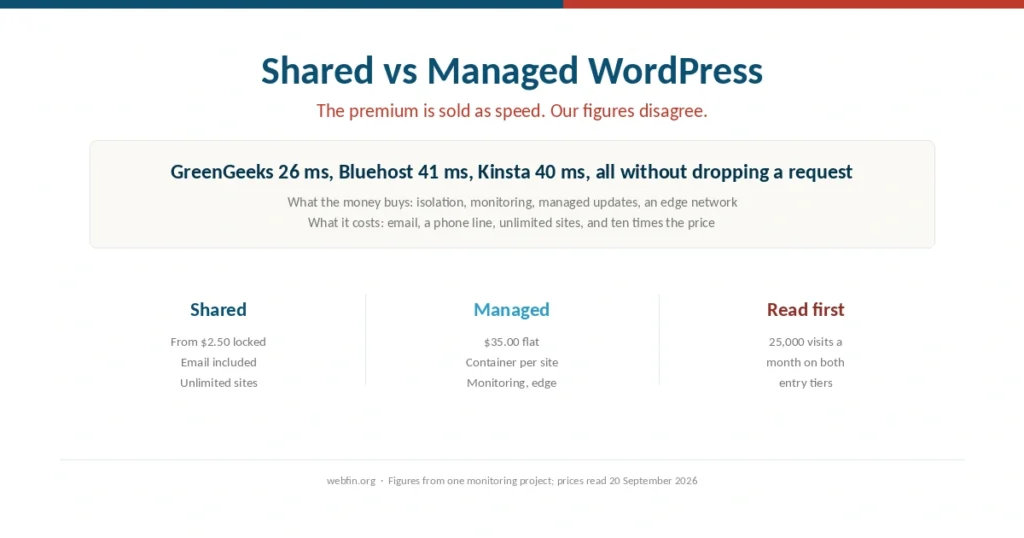
The premium is sold as speed, and our own load figures do not support that. Here is what it actually buys.
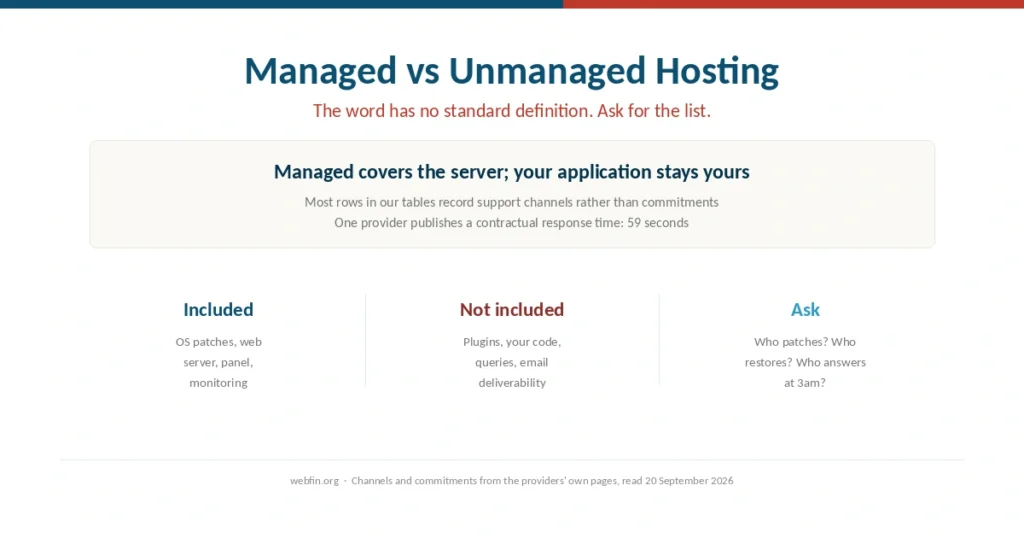
Two plans at the same price can mean different things. Stop reading the adjective and ask for the list.
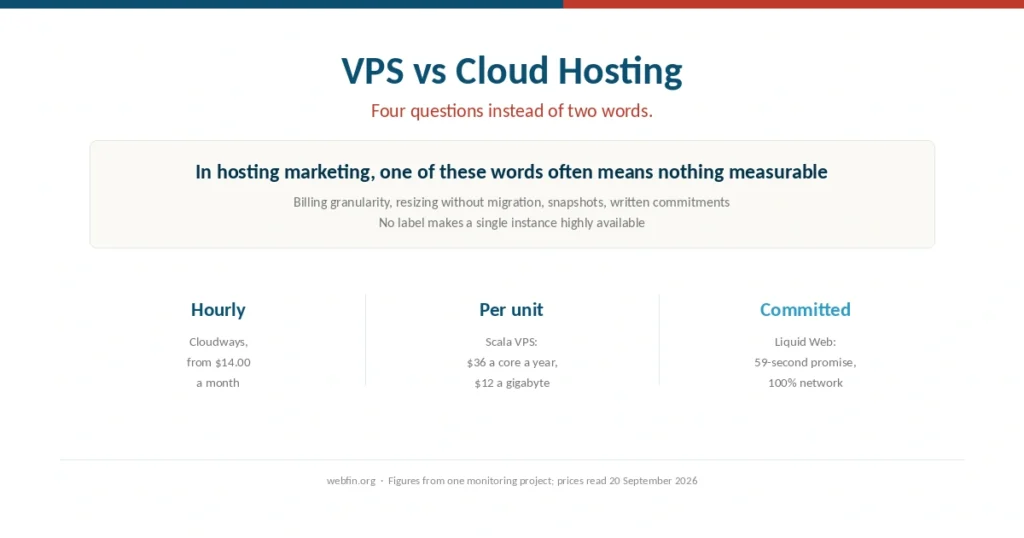
One of these words often means nothing measurable. Four questions have checkable answers instead.
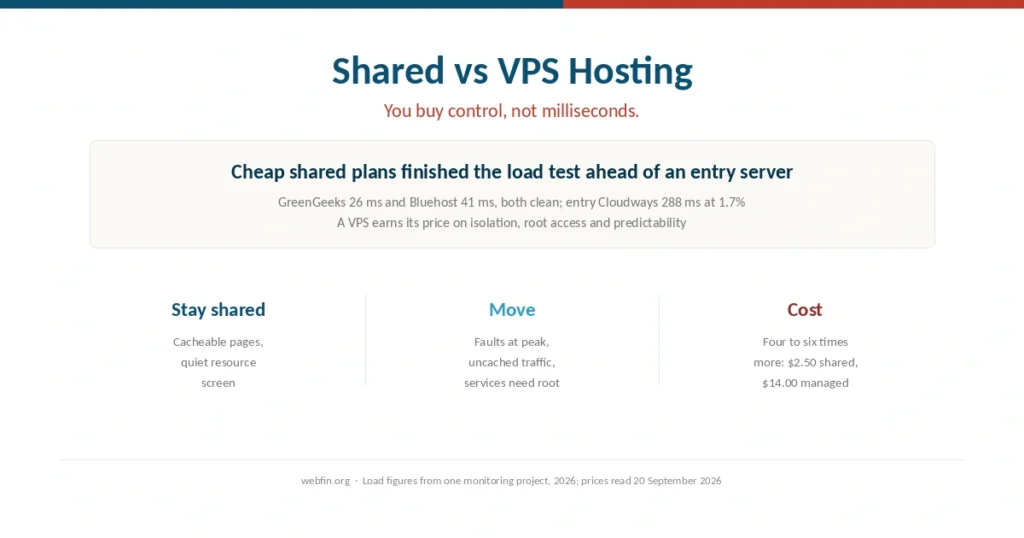
Cheap shared plans finished the load test ahead of an entry-level server. So a VPS is bought for other reasons.