
Disclosure: WebFin is reader-supported. If you buy hosting through links on this page, we may earn a commission at no extra cost to you. Commissions vary between providers and our ratings do not — here’s our full disclosure.
WebFin runs on Hostinger, which appears below. We pay for the plan ourselves and have received no discount or other consideration, and that does not change how it scores.
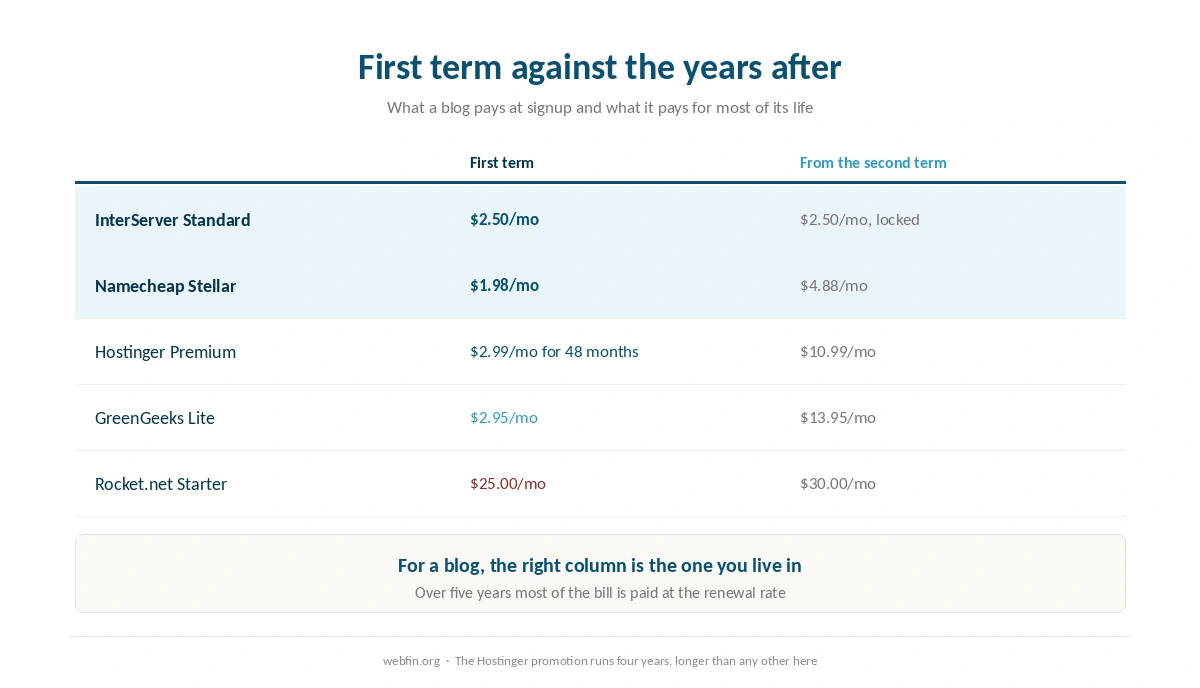
The best hosting for bloggers is chosen on the renewal price, because a blog outlives every promotion. A store gets rebuilt, a startup pivots, and a blog just keeps going for five or ten years on the same host. So the rate that matters is the one you pay from the second term onward: $10.99 at Hostinger, $4.88 at Namecheap, $2.50 for life at InterServer. Blogs also have one technical advantage. Nearly every page can be cached, which means an edge network does more for a blog than for any other kind of site.
Best Hosting for Bloggers: The Short Answer
Hostinger for most bloggers. The 48-month term keeps $2.99 running for four years, uptime reads 99.99% across 2025, and the Business tier adds the network that takes first byte from 495 ms to 223 ms. InterServer is the pick for a blog that will run indefinitely on a small budget.
Why the Renewal Matters More for a Blog
Most buyers compare opening rates, and for most sites that is only half wrong. A blog is different, because it stays. Over five years a blogger spends most of the time on the renewal rate, so a cheap first year followed by a steep second is the worst possible shape for this use.
Three structures do well under that test. A long promotion, like the Hostinger 48-month term. A gentle renewal, like Namecheap at $4.88. And a price that never moves, like InterServer at $2.50. Our page on hosting renewal prices lists every plan by what it charges from year two.
⚠️ Watch the term behind any opening rate. GreenGeeks, for example, costs $106.20 across three years on a 36-month prepay and $370.20 on annual terms, for the same plan. The table below gives each option at the term that produces its figure.
| Host and plan | How it builds | 36-month total |
|---|---|---|
| ChemiCloud Starter, 36-month term | 36 prepaid months at $2.49 | $89.64 |
| InterServer Standard | 36 months at $2.50, price locked | $90.00 |
| DreamHost Launch, 48-month term | 36 of 48 prepaid months at $2.89 | $104.04 |
| Namecheap Stellar, 24-month term | 24 at $1.98, then 12 at $4.88 | $106.08 |
| Hostinger Premium, 48-month term | 36 of 48 prepaid months at $2.99 | $107.64 |
| HostGator Hatchling, 36-month term | 36 months at $3.75, renewal not reached | $135.00 |
| HostGator Hatchling, with daily backups | 36 at $3.75, plus CodeGuard at $35.88 a year | $242.64 |
| Bluehost Starter, 36-month term | 36 months at $3.99, renewal not reached | $143.64 |
| GoDaddy Economy, 36-month term | 36 months at $5.99, renewal not reached | $215.64 |
| GoDaddy Economy, with SSL from year two | 36 at $5.99, plus $119.99 in years two and three | $455.62 |
| Hostwinds Basic, annual | 12 at $4.54, then 24 at $6.99 | $222.24 |
| SiteGround StartUp, 24-month term | 24 at $2.99, then 12 at $14.99 | $251.64 |
| DreamHost Launch, annual | 12 at $2.89, then 24 at $10.99 | $298.44 |
| Scala Hosting Mini, annual | 12 at $2.95, then 24 at $11.95 | $322.20 |
| Bluehost Starter, 12-month term | 12 at $3.99, then 24 at $11.99 | $335.64 |
| IONOS Plus, annual | 12 at $1.00, then 24 at $14.00 | $348.00 |
| GreenGeeks Lite, 36-month prepay | 36 months at $2.95 | $106.20 |
| GreenGeeks Lite, annual | 12 at $2.95, then 24 at $13.95 | $370.20 |
| SiteGround StartUp, 12-month term | 12 at $2.99, then 24 at $17.99 | $467.64 |
| Cloudways, from | 36 months at $14.00, flat | $504.00 |
| A2 Hosting Turbo Boost, annual | 12 at $6.99, then 24 at $20.99 | $587.64 |
| Rocket.net Starter, annual | 12 at $25.00, then 24 at $30.00 | $1,020.00 |
| WP Engine Startup, annual | 12 at $27.00, then 24 at $35.00 | $1,164.00 |
| Liquid Web managed VPS | 36 months at $33.00 | $1,188.00 |
| Kinsta Starter | 36 months at $35.00, flat | $1,260.00 |
| InMotion Core, 36-month term | 36 months at $3.19, renewal not reached | $114.84 |
| InMotion Launch, 36-month term | 36 months at $4.99, renewal not reached | $179.64 |
Hostinger: Four Years at the Opening Rate
Hostinger Premium costs $2.99 a month on a 48-month term and renews at $10.99, which is 3.7× over 48 months. Thirty-six months come to $107.64, and the promotion still has a year to run at that point. Independent monitoring recorded 99.99% uptime across 2025, or 33 minutes offline.
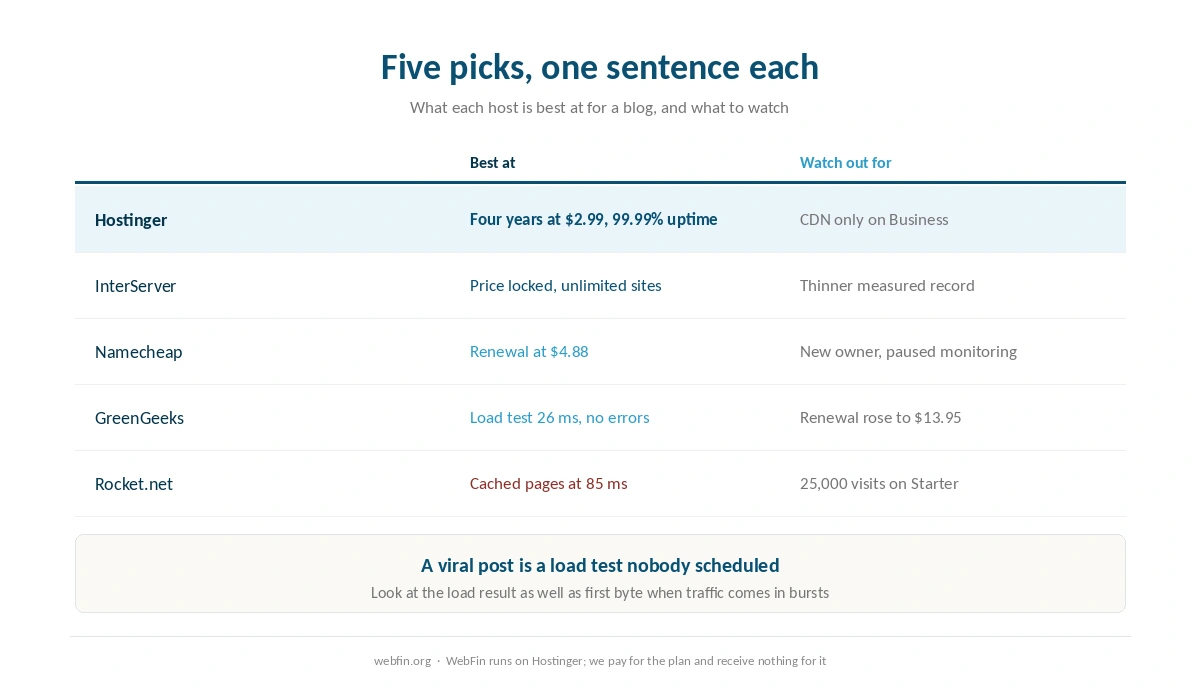
Strengths. The longest promotional term in shared hosting, which suits a blog better than a deep short discount. Strong measured uptime. A Business tier with a content network that cuts first byte from 495 ms to 223 ms, which matters for readers spread across countries.
Weaknesses. Premium itself has no edge network, so the fast figure belongs to the tier above. Resource limits are not published. And the long term means paying four years up front for the best rate.
Choose it if the blog is serious and will run for years. Skip it if you want to pay month by month. Our Hostinger review prices both tiers.
InterServer: A Price That Never Moves
InterServer Standard costs $2.50 a month with the price locked, so three years come to $90.00 and year ten costs the same as year one. One plan holds unlimited sites, which suits a blogger who starts a second site on a new topic.
Strengths. The only structure here with no renewal step at all. Phone, chat and tickets around the clock. Independent since 1999, which is a better guarantor of a price lock than a company that could change hands.
Weaknesses. Its measured record is thinner than Hostinger’s, with first byte in the 450 to 500 ms band and uptime observed on six sites by one reviewer. No edge network is bundled.
Choose it if the blog is a long hobby on a small budget. Skip it if you want measured performance before paying. Our InterServer review explains the lock.
Namecheap: The Gentlest Renewal, With Two Caveats
Namecheap Stellar opens at $1.98 and renews at $4.88, which is 2.5× over 12 months and the same over 24 months. Three years on 24-month terms come to $106.08. For a blogger who wants a low renewal without a four-year prepayment, that is a strong offer.
Strengths. A renewal rate most hosts charge at signup. Domain privacy included for the life of the domain. A familiar cPanel.
Weaknesses. CVC Capital Partners bought a majority stake in September 2025, and a new owner is where renewal policy tends to change. Its monitoring stopped reporting to the benchmark project on 30 June 2026, so its speed figures carry an asterisk.
Choose it if you want a low renewal on a shorter term. Skip it if ownership stability matters to you. Our Namecheap review tracks both caveats.
GreenGeeks: Built for the Day a Post Goes Viral
A blog’s traffic arrives in spikes: a post gets shared, and a thousand readers turn up in an hour. GreenGeeks handled the 2026 load test in 26 ms with no errors, against a median of 58 ms among hosts that completed it. That is the result a blogger should care about most after price.
Strengths. Load handling well above the field. A documented 300% renewable energy commitment, which some audiences notice. Fewer outages than several larger hosts, at 25 in the window.
Weaknesses. The Lite renewal rose to $13.95 this year, and sources disagree on the term behind its $2.95 opening rate. Server hardware scores 5.0 of 10. The benchmark project found no integrated edge network despite the advertising.
Choose it if your traffic comes in bursts. Skip it if you need a clear renewal before paying. Our GreenGeeks review covers the renewal change.
Rocket.net: When the Blog Pays for Itself
Rocket.net costs $25.00 a month and renews at $30.00, which is 1.2× over 12 months. Three years come to $1,020.00, which is a business expense rather than a hobby expense. What it buys is an edge network on every page, and a twelve-month test recorded cached pages at 85 ms globally.
For a blog that matters. Almost every post is cacheable, so readers see the fast figure nearly all the time, unlike a store where checkout bypasses the cache. For a monetized blog with international readers, this is the one managed host whose main feature fits the use exactly. If your plan has no content network, setting up a CDN covers the options.
Choose it if the blog earns money and the readers are global. Skip it if it is a hobby, because Starter caps visits at 25,000 a month. Our Rocket.net review has the detail.
Four Blogs, Four Answers
A new hobby blog. InterServer or Namecheap. Neither asks for a long prepayment, and both keep the second year cheap. If the blog stalls after six months, little money is lost.
A blog you expect to run for years. Hostinger on the 48-month term. Four years at the opening rate is worth more to a stable site than any first-year discount elsewhere, and the uptime record supports the commitment.
Several blogs on different topics. InterServer, because one plan holds unlimited sites at one locked price. Most entry plans here allow one site and push a second into a higher tier.
A monetized blog with readers abroad. Rocket.net, or Hostinger Business if the budget is tighter. Both put a content network in front of the site, and our guide to reducing TTFB explains why that matters more than the server for pages that can be cached.
What a Blogger Actually Needs
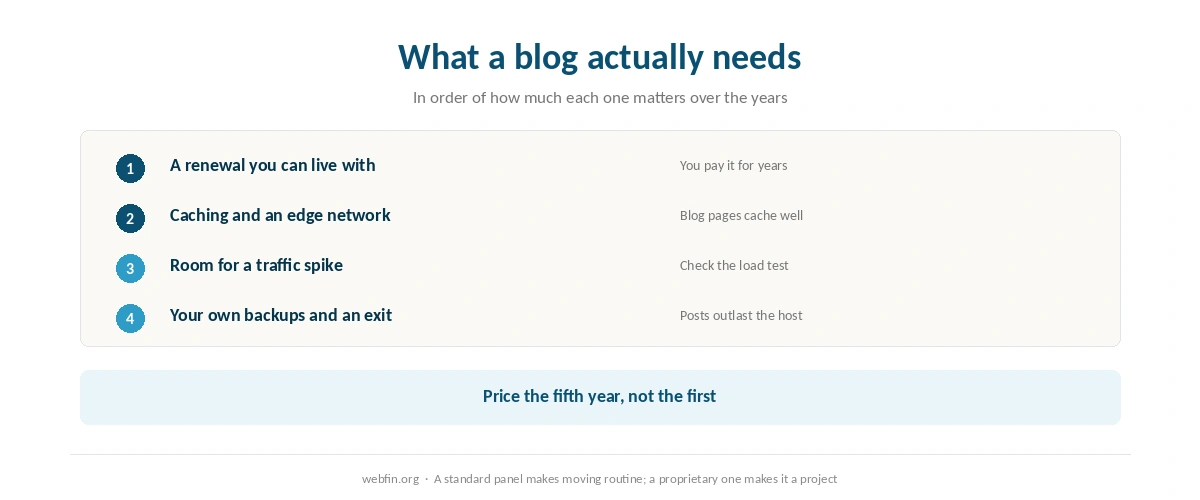
Caching, not raw power. A blog serves the same pages repeatedly. Page caching and an edge network do more for it than a bigger server, which is why the fast tiers here are the ones with a network attached. A podcast site works on the same economics, as hosting for podcasts explains.
Spike handling. A viral post is a load test you did not schedule. Look at load results, not only first byte, because a host that answers once quickly may still drop requests when a thousand arrive.
Backups you control. Years of posts are the asset. Keep your own copies as well as the host’s, as our guide to backing up a WordPress site explains.
An exit. A blog that runs for a decade will probably move at least once. A standard panel makes that routine, and a proprietary one makes it a project.
How We Research
We run no speed or uptime tests. Measurements come from Hostingstep’s 2026 benchmarks and a twelve-month edge test, each with its window, and thinner evidence is labeled as such. Prices come from the providers’ own pages, read on 20 September 2026, and every three-year total is built from renewal rates.
A blog is judged here on how it ages rather than how it launches, which is why the renewal carries more weight in this guide than in most. The criteria behind our scores are on our about page, and the wider field sits in our roundup of cheap web hosting.
Blog Hosting FAQ
InterServer, at $2.50 a month with the price locked, which is $90.00 across three years and the same rate in year ten. Namecheap renews at $4.88 and Hostinger at $10.99, so both cost more once their promotions end.
It helps more for blogs than for most sites, because nearly every page can be cached. Hostinger Business answers in 223 ms with its network against 495 ms on Premium without one. For readers in several countries, that difference is visible.
The host faces a load test you did not plan. GreenGeeks handled the 2026 test in 26 ms with no errors, well above the field median. A host that answers one request quickly may still drop requests when a thousand arrive together.
Only if you are sure the blog will run that long. Hostinger’s 48-month term holds $2.99 for four years, which suits a serious blog. The refund window covers the first 30 days, so the rest is a commitment rather than an option.
For a monetized blog with global readers, it can be. Rocket.net serves cached pages at 85 ms globally and renews at $30.00. For a hobby blog, that is several times the cost of a shared plan for a difference readers rarely notice.
The Verdict
Hostinger is the default for a blogger, because a 48-month promotion followed by strong measured uptime is the shape that suits a site built to last. InterServer is the better buy for anyone who wants to set a price and never think about it again. Rocket.net is the rare managed host whose main feature fits a blog precisely, and it belongs to blogs that already earn. A blog that starts selling courses meets a different set of limits, which hosting for online courses covers.
Whatever you choose, price the fifth year rather than the first, because that is the year a blog actually pays for. And keep your own backups, because the posts outlast the host. If you move later, our guide to migrating web hosting covers the order of operations.